
Let me ask you, do you feel like you’ve built yourself a high-paying, high-stress job rather than a truly valuable asset? And what happens to that ‘job’, and the ‘pension’ it’s supposed to fund, the day you can’t show up?
This isn’t a theoretical exercise. It’s the most important question you can ask yourself as a business owner. Here are the key things you need to understand about the difference between a business that sells and one that doesn’t.
- The Great Delusion: Most owners believe their business is an asset, but in reality, it’s a job completely dependent on them. The more your business needs you, the less it is worth.
- The ‘Unsaleable Job’: This is characterised by owner-reliance, constant firefighting, undocumented processes, and a disempowered team. A buyer sees this as a massive liability.
- The ‘Saleable Business’: This is a system. It runs on documented processes, has an empowered team, and operates profitably without the owner’s daily involvement. This is what a buyer is looking for.
- The Blueprint for Change: The transformation from ‘job’ to ‘business’ is a methodical process of building systems and controls that reduce dependency and create transferable value.
In this article, I’m going to lay bare the fundamental difference between the 20% of businesses that sell and the 80% that don’t. I’ll tell you now, it has very little to do with turnover or industry; it’s about structure and dependency.
We’ll look at the brutal truth behind why most businesses are unsaleable, I’ll walk you through the critical shift from a ‘job’ to a ‘system’, and I’ll show you the exact blueprint for turning your life’s work into the transferable, valuable asset it needs to be.
The Great Disconnect Most Owners Suffer From
Let’s get one thing straight. The market is littered with businesses that fail to sell, over 80% of them, in fact. Yet, most owners believe theirs is different.
The disconnect is staggering; over 98% of business owners are relying on a ‘pension’ they’ve never actually had valued. They’re guessing.
In my 30 years of working with business owners, the single most dangerous delusion I see is the belief that being indispensable adds value. I’m here to tell you the opposite is true: the more your business needs you, the less it is worth.
It really is as simple, and as brutal, as that.
A Head-to-Head Comparison
The Unsaleable ‘Job’: Why 80% of Businesses Are Worthless to a Buyer
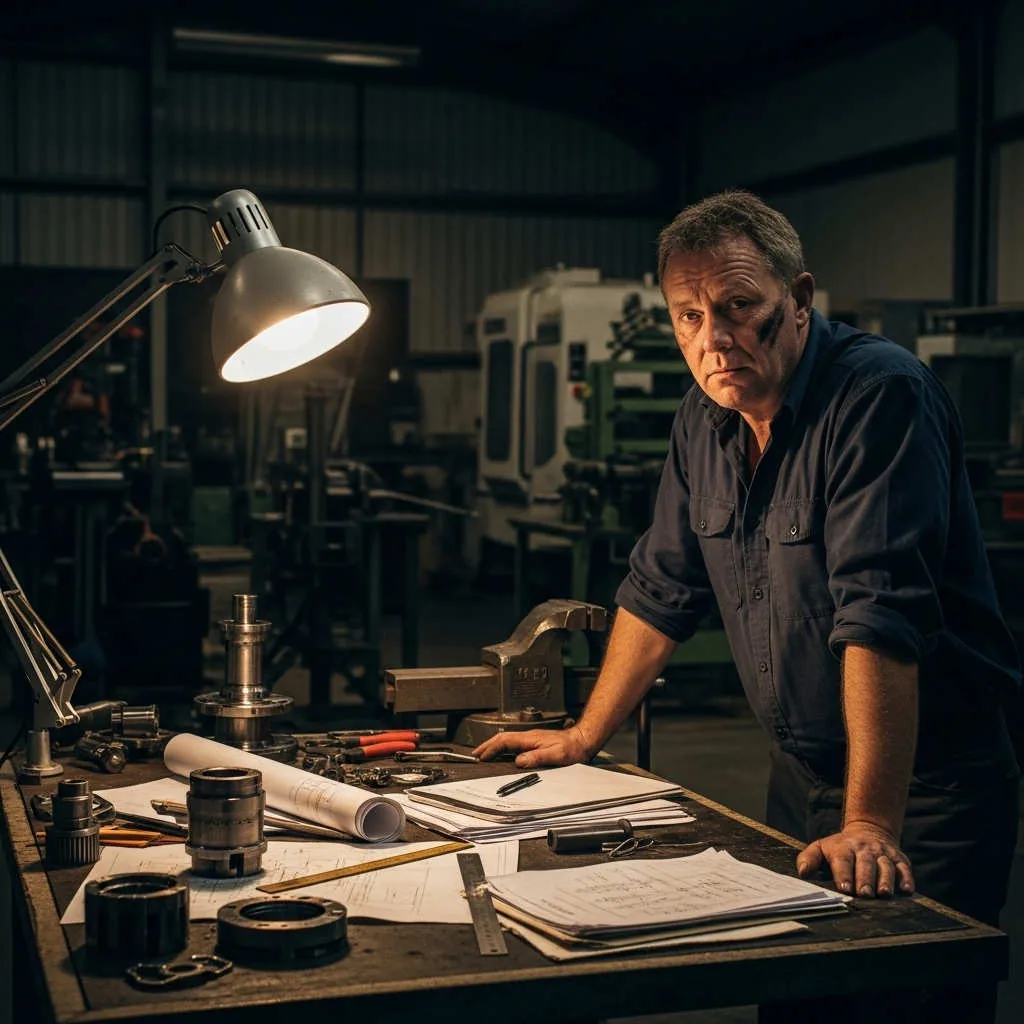
Does the crushing weight of your business feel familiar? You are the chief firefighter, the key decision-maker, and the keeper of all crucial relationships.
Let’s be honest, in the early days, your total involvement was the only thing that guaranteed survival. You did everything because you had to. But that same behaviour today is the very thing that makes your business unsaleable. When a buyer looks at it, they don’t see strength; they see a massive liability. They see a bottleneck.
This operational reality is chaotic. Key processes are undocumented because they live in your head. Delivery is inconsistent, and the entire culture is one of reacting to problems rather than preventing them. It’s exhausting for you and invisible to a buyer, who only sees the risk.
This directly feeds the “no one can do it like me” mindset. Because you hold all the strings, your team has no choice but to constantly refer decisions back to you. They are disempowered, not because they are incapable, but because the system, or lack thereof, forces them to be dependent. This cycle reinforces your belief that you are essential, when in fact, you are the primary obstacle to creating real, transferable value.
On top of this, the finances are often a mess. Accounts can be unclear, and the valuation is based on guesswork. For a buyer, this lack of financial clarity makes it impossible to trust the numbers or accurately assess the risk they would be taking on.
The Saleable ‘Business’: A System Built to Be Transferred
Now, let’s look at the alternative. In a saleable business, the owner works on the business, not in it. They are the strategist, the architect. The company operates smoothly and profitably without their constant, daily involvement.
How? Because systems and controls run the show. The value isn’t in a person; it’s embedded in the fabric of the business.
Documented, repeatable processes are the engine of a saleable company. This is about building robust C.O.N.T.R.O.L.S. (Communication, Organisation, Next, Trust, Responsibilities, Owner Reliance, Leadership, Systems) that ensure consistency and quality, no matter who is performing the task.
This kind of business has an empowered leadership team. There is a capable management structure with delegated authority and, critically, a clear succession plan. This de-risks the entire transition for a buyer, giving them confidence that the business has a future beyond the current owner.
Finally, a saleable business runs on financial clarity. It has clean, timely reporting and, most importantly, a professional, objective valuation. My F.A.C.E. Value Formula is designed to achieve this, looking at Financials, Assessment, Comparison, and Exit value to provide a number that inspires buyer confidence because it’s based on reality, not hope.
A Stark Comparison: Is Your Business a Job or a True Asset?
This is the point where we need to be brutally honest. Look at this table and decide which column truly describes your business today.
The Fear of Letting Go
I know what you might be thinking after looking at that table. Letting go feels like losing control, or even a loss of identity. That fear is real.
But the alternative, clinging on until the business has no value to anyone, including your family, is far worse. Building a business that can run without you isn’t an admission of failure; it’s the ultimate act of strategic leadership and the only way to secure your financial freedom.
The Blueprint for Transformation
So, what’s the takeaway? The divide between saleable and unsaleable is clear. One is a system, the other is a job. One has transferable value, the other has value that walks out the door with you.
This isn’t just theory. There is a structured, methodical path to make this change. I call it the Exit Success System, and it’s designed to guide you through five critical stages: from Reviewing your true value, getting Ready with a plan, Reaching your goals with your team, Regulating the business with controls, to finally Realising your successful exit. It is the practical ‘how-to’ for this essential transformation.

Proof It Works: The Bankruptcy to 8-Figure Exit Story
If you think your business is in a uniquely difficult spot, I want to share a story that’s deeply personal to my work and proves that transformation is always possible.
I once took a business from the brink of bankruptcy to an eight-figure exit. It was in absolute chaos, hidden debts, no strategy, total dependency on a few key people. It was made saleable by systematically turning it from a job into a system. If it can be done there, it can be done in your business.
The first step is getting an honest, objective look at where you stand. Take the 3-minute Exit Ready Quiz now to see how a buyer would score your business today.
Your Business, Your Choice
Understanding this distinction is the first, most important step. The path from a stressful job to a valuable, transferable asset is a deliberate one, but it is entirely achievable.
The question isn’t whether you’ll leave your business, that’s a 100% certainty.
So, look in the mirror and ask yourself: are you building a legacy, or just a cage?
The choice is yours. The work starts today.
If you recognise your business in the ‘unsaleable job’ description and want to understand the steps to get out of the day-to-day, a conversation may be the best next step. You can call me on 0333 567 8011 or book a call directly.