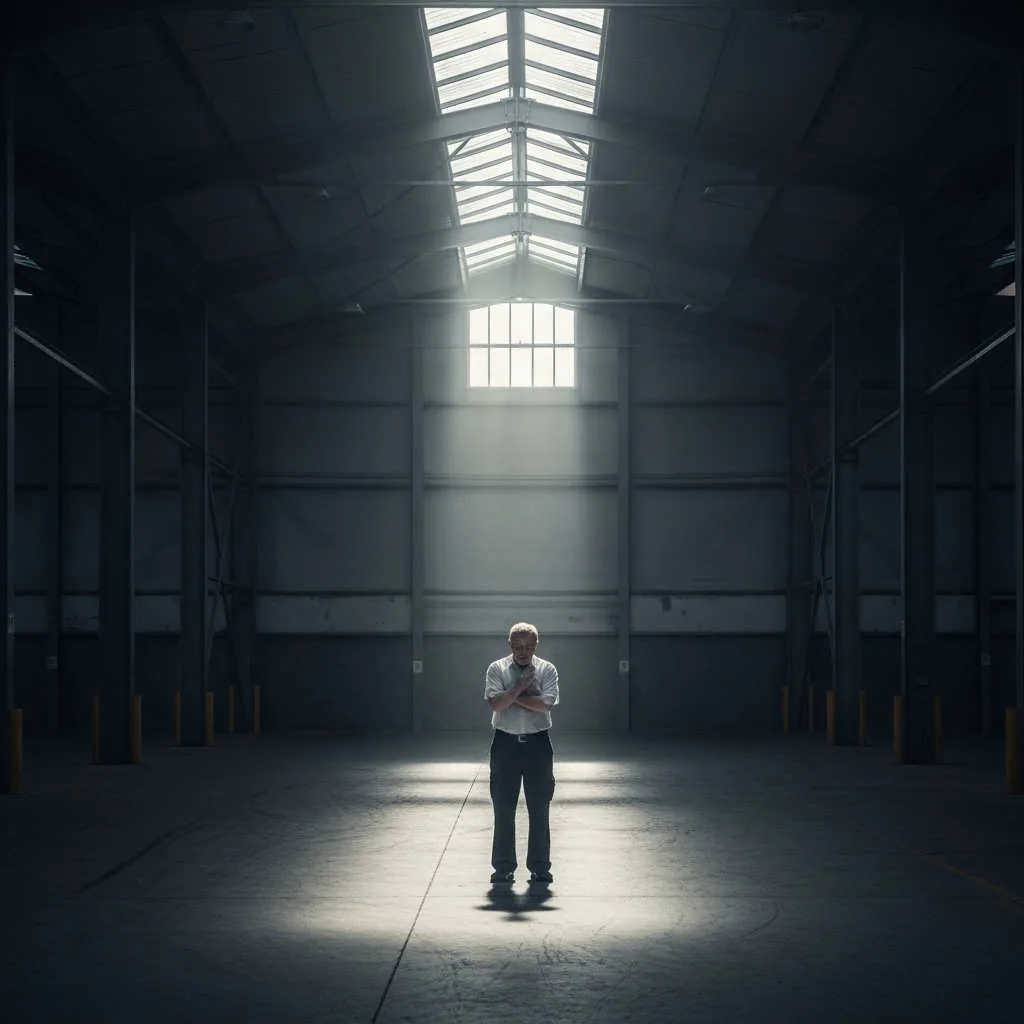
If the owner is the smartest person in the room, they are the bottleneck. Many business owners believe their hard work and constant oversight are the glue holding their company together.
The reality is that this dependency is the single biggest risk to their financial future and the primary reason businesses fail to sell.
My goal is to educate you so you can make the best decision, even if that means you don’t buy from me. I want to help you transition from being the exhausted operator to the strategic owner of a valuable asset.
What do I mean by ‘Reducing Owner Reliance’?
Reducing owner reliance is the systematic process of extracting the business owner from day-to-day operations and decision-making.
It involves documenting processes, developing a management team, and creating a governance structure that allows the business to thrive independently of the founder. This transformation shifts the business from being a high-stress job to a transferable, saleable asset.
Why Trust Me?
This guide is built on my lived experience guiding owners through over 100 business transactions. It draws on real-world outcomes, including the story of Mark, who used this methodology to transform a cash-strapped entertainment business into a resilient asset that funded his dream Aston Martin.
It also honours the lesson of Trevor, whose tragic story illustrates how total owner dependency can destroy a £20m legacy in months. I rely on evidence, not theory.
What I will cover in this Guide:
- The Cost of Indispensability
- Diagnosing the Bottleneck
- The “Hit by a Bus” Reality
- Quality Control Without You
- Steps to Freedom: What to Delegate First
- The Paradox of Growth
- Achieving the “Machine” Mindset
- Leadership vs. Incapability
- Building a Lasting Legacy
- Constructing Your Replacement Team
- The Impact on Saleability
- Frequently Asked Questions
The Cost of Indispensability
Owner indispensability is a quantifiable, multi-million-pound cost, not an asset. When you calculate how much is my constant hands-on involvement costing my business, it becomes clear that buyers view such “heroics” as a massive risk.
They apply a “key person discount” to the valuation because they are buying a business that cannot function without the current owner.
This financial penalty is compounded by the opportunity cost of time.
Every hour an owner spends on low-value tasks is an hour not spent on the strategic work that builds capital value. Viewing involvement as free is a mistake; it should be seen as the most expensive resource in the company.
Diagnosing the Bottleneck
Owners often remain the bottleneck because their process of delegation is flawed, not because the team is incapable. If you are wondering why am I still the bottleneck in my business despite years of trying to delegate, it is often necessary to examine the method.
Failed delegation reinforces the belief that “no one can do it like me,” creating a vicious cycle of micromanagement.
This cycle creates decision fatigue for the leader and learned helplessness for the staff. If you are constantly asking why can’t my management team make decisions without constantly asking me, the answer typically lies in the lack of a clear authority matrix.
Without defined boundaries and permissions, teams will always default to asking permission, trapping the owner in the centre of every issue.
See How a Buyer Rates Your Business
Are you building an asset or a trap? Get an honest score on your owner reliance in just 3 minutes.
The “Hit by a Bus” Reality
A business that depends on an individual cannot survive a serious health crisis. You must ask yourself would my business survive if I had a serious health crisis tomorrow. If payroll cannot be run, decisions cannot be made, or clients cannot be serviced without the owner, the business is fragile.
This isn’t just about health; it is about the security of the “pension.” The tragic story of Trevor proves that a lack of preparation can lead to the total collapse of a profitable company within months of the founder’s exit. Protecting a legacy starts with ensuring the business can operate when the founder is not there.
Quality Control Without You
Quality often slips because standards are trapped in the owner’s head, not in a system. If you are frustrated by why does quality slip the moment I stop personally checking everything, recognise this as a systems problem. Relying on personal intervention rather than documented processes to maintain standards creates inconsistency.
To fix this, you must transition from being the quality controller to the quality architect.
By documenting processes and giving the team the authority to own the outcome, you create consistency that doesn’t rely on one person’s presence. This is how businesses scale without sacrificing standards.
Steps to Freedom: What to Delegate First
Effective delegation starts with low-risk administrative tasks to reclaim time. If you are unsure which parts of my business should I stop managing personally first, begin with the “Admin First” foundation.
Tasks like diary management and basic inbox filtering are high-volume but low-risk distractions that keep leaders in the weeds.
Once you clear the noise, you can move on to systemising key functions like payroll and customer service. This gradual approach builds confidence in the team and frees up mental bandwidth for strategic thinking.
Owners cannot delegate effectively until they measure exactly where their time is going.
The Paradox of Growth
The paradox of growth is that success often leads to longer working hours for the owner. If you are asking why am I working longer hours as my business grows instead of fewer, it is likely because the role hasn’t evolved from “Chief Doer” to “Strategic Leader”.
As the business expands, the volume of decisions and problems multiplies, and if they all funnel to one person, they will drown.
Owners often try to wear three hats (Shareholder, Director, and Employee) simultaneously. To break this cycle, you must deliberately exit the operational role. Growth without systems is just a faster route to burnout.
Achieving the “Machine” Mindset
Successful owners build a machine that runs on systems, not adrenaline. If you want to know how do some business owners work half the hours I do with the same results, the secret lies in their refusal to be the hero. They have built documented systems and have a capable team that functions independently of them.
This “machine” mindset allows you to focus on strategy while the business handles the day-to-day.
Mark’s story proves that this shift doesn’t just give you your life back; it builds a resilient asset that can thrive during crises like a pandemic. Freedom is the result of deliberate architectural work, not working harder.
Leadership vs. Incapability
A leadership style is often the reason a team appears incapable. You may wonder is my team truly incapable, or am I preventing them from succeeding. The reality is that by constantly stepping in to “save the day,” owners train their staff to be helpless and risk-averse.
This dependency is a symptom of a lack of clear authority and trust. By using tools like the S.C.A.R.T. assessment, owners can objectively evaluate the team and often realise that the bottleneck is their own refusal to let go. You must shift from being the hero to being the leader who builds capability in others.
Building a Lasting Legacy
A legacy is built by creating systems that survive the founder, not by being indispensable. If you want to know why do some businesses grow after the founder leaves while others fall apart, the answer is preparation. Businesses that endure are those where the founder spent years transferring their knowledge into the fabric of the company.
The Commodore Group is a prime example of a legacy secured through a decade of deliberate succession planning.
Conversely, businesses built solely around the founder’s personality are destined to collapse when that person is gone. Legacy is chosen by the work done today to make the owner redundant.
Constructing Your Replacement Team
Business owners cannot simply hire a ready-made leader; the management team must be deliberately built to replace the owner. If you are asking how do I build a management team that can actually replace me, stop looking for a unicorn external hire. The most effective successors are often developed from within existing ranks through a structured process of increasing responsibility.
You need to implement a “C.O.N.T.R.O.L.S.” framework that gives leaders the clarity and authority they need to act.
This isn’t about you abdicating; it’s about you creating a governance structure where decisions are made based on rules and strategy, not personal sign-off. This is how a group of managers turns into a leadership team.
The Impact on Saleability
A highly saleable business is defined by its ability to thrive without the owner. When you ask what separates highly saleable businesses from ones nobody wants to buy, the answer is almost always owner reliance. A buyer wants a system they can scale, not a high-stress job that depends on one person.
Clean financials are the entry ticket, but the premium is paid for the “Assessment” of non-financials, specifically, the absence of key person risk. To sell for a premium, you must present a business where the value is embedded in the team and processes, not in the owner’s head.
Frequently Asked Questions about Reducing Owner Reliance
Q: Can I really replace myself if I have unique technical knowledge? A: Yes. While your genius might be unique, the majority of your daily tasks (invoicing, project management, admin) are not. By systemising the mundane, you protect the time for the brilliant and reduce the business’s operational reliance on you.
Q: How long does it take to reduce owner reliance? A: It is a process, not an event. Typically, it takes 12 to 36 months to fully systematise a business and develop a management team to the point where the owner can exit the day-to-day operations completely.
Q: What if my team makes mistakes when I delegate? A: Mistakes are part of the learning process. If an owner steps in to fix them immediately, dependency is reinforced. You must provide a framework for them to learn and correct their own errors, which builds their competence and confidence over time.
Next Steps for Your Project
It is clear that owner indispensability is the greatest threat to your business’s value and your future freedom. Business owners face a choice: continue to be the exhausted hero of a fragile business, or become the architect of a resilient asset.
If you are ready to stop guessing and start building a business that can survive and thrive without you, then the first step is simply to understand exactly where you stand today.
Ready to find out how saleable your business really is?
Take my confidential 3-minute Exit Ready Quiz and get your personalised report